


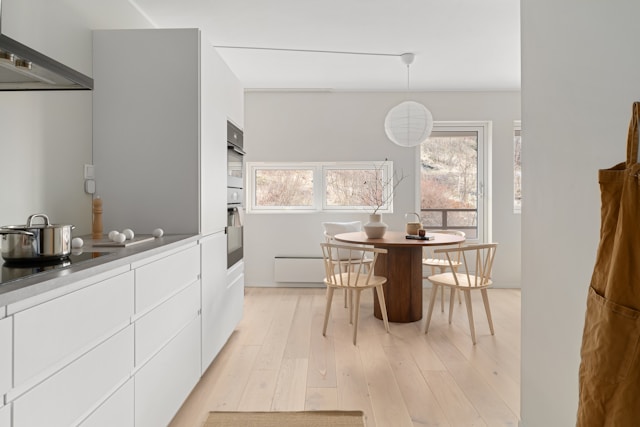
Dining tables are one of the few pieces of furniture that are expected to work well under a variety of conditions: a quick weeknight dinner, a birthday gathering, a working lunch, a Sunday with the whole family. The decision between a round and rectangular dining table is not a matter of personal preference but a matter of which shape best handles those conditions given the specific room, household size, and entertaining habits. That decision is something Australian furniture sizing data, space-planning research, and environmental psychology can all say something concrete about.
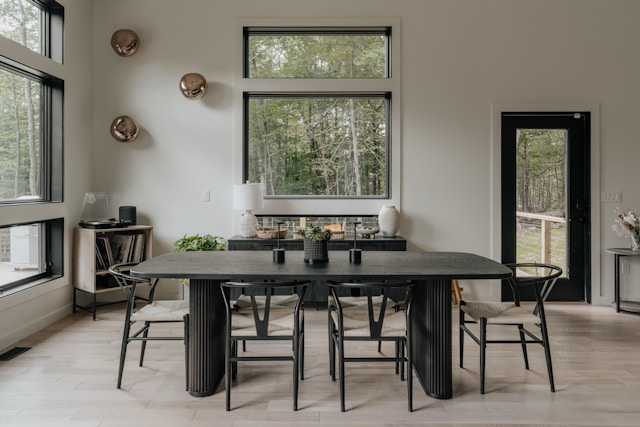
Your Room Shape Should Drive the Table Shape
Perhaps the least considered criterion in choosing a dining table is the way the table shape relates to the geometry of the room. In square dining areas and small apartments, circular dining tables enhance flow by eliminating corners that protrude into passageways and reduce the number of points of impact during everyday circulation; interior space-planning studies have shown that curved furniture actually increases circulation pathways in tight rooms. That is a practical benefit in a room with multiple entries and no place for corners to trap people as they move between the kitchen and the living area.
Rectangular tables fit the geometry of the room better than a circular one: a round table centred in a long, narrow dining room leaves proportionally more wasted floor space on the sides than a rectangular one, which fits the geometry and keeps the circulation paths even on both sides. An 18% increase in tabletop area needed for a 120 cm round table compared to a rectangular one with the same four-person capacity is more significant in some rooms than in others. The most important decision is getting the shape right for the room, before price, material, or anything else.
Seating More People Changes the Calculation Significantly
Both shapes work fine at four to six seats, but once the household needs to seat more, the difference becomes pronounced: A round table that seats eight requires a much larger room footprint than a rectangular table that is scaled up to seat eight guests along its sides, since the diameter grows faster than the length as guest numbers increase, and research in furniture planning consistently shows that rectangular tables provide more seats per square metre than round once guest numbers exceed six.
Extendable rectangular dining tables take that advantage a step further: A design that seats six at its standard size and expands to eight or ten for parties offers the flexibility of a round table without the need for a permanently larger footprint, and it has practical appeal for households that host frequently but do not desire a large table to dominate the room on everyday occasions. It is a more forward-thinking purchase for growing households that may need the table to function for the family now and the family in five years.
The Shape of The Table Affects the Conversation at It
Research in environmental psychology shows that equidistant spacing between people results in more even participation in conversation, and round tables provide just that environment: each person can see everyone else and no one is sitting at the head. In households where the dining table is the place where family conversations occur, where children discuss their day and adults discuss their work, that geometric equality has a social impact that is often overlooked when selecting furniture in a showroom.
Circulation, Cost, And Making the Final Call
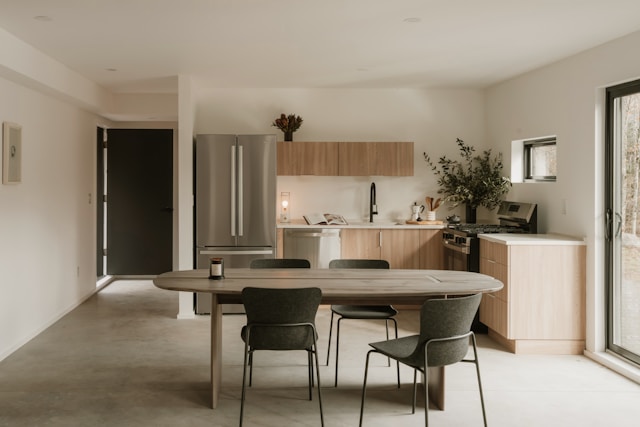
According to furniture planning guidelines, a dining table requires 90 cm of clearance around the table for comfortable daily movement, and round tables are best at dealing with multi-directional traffic because there are no corners projecting into that clearance space (an advantage that is most apparent in open-plan homes where the dining area may be a thoroughfare as much as a destination). Most design professionals advise round tables for rooms smaller than about 3.6 square metres because movement through the space just flows more naturally without corners to navigate around at every meal.
Larger round tables, especially those with pedestal bases, typically use more material and require more specialised manufacturing than rectangular tables of the same seating capacity, driving up the cost. Rectangular tables provide more options for extension mechanisms and are easier to integrate with benches, sideboards, and built-in seating. Ultimately, the decision comes down to these three straightforward questions: What does the room permit, what do I need the table to seat on a normal day versus a peak day, and is it important to me to have daily conversation or is it more important to have maximum hosting capacity?